The Inspection Your Wash Park Bungalow Can't Skip, Even Though No One Requires It
August 27, 2026
August 27, 2026
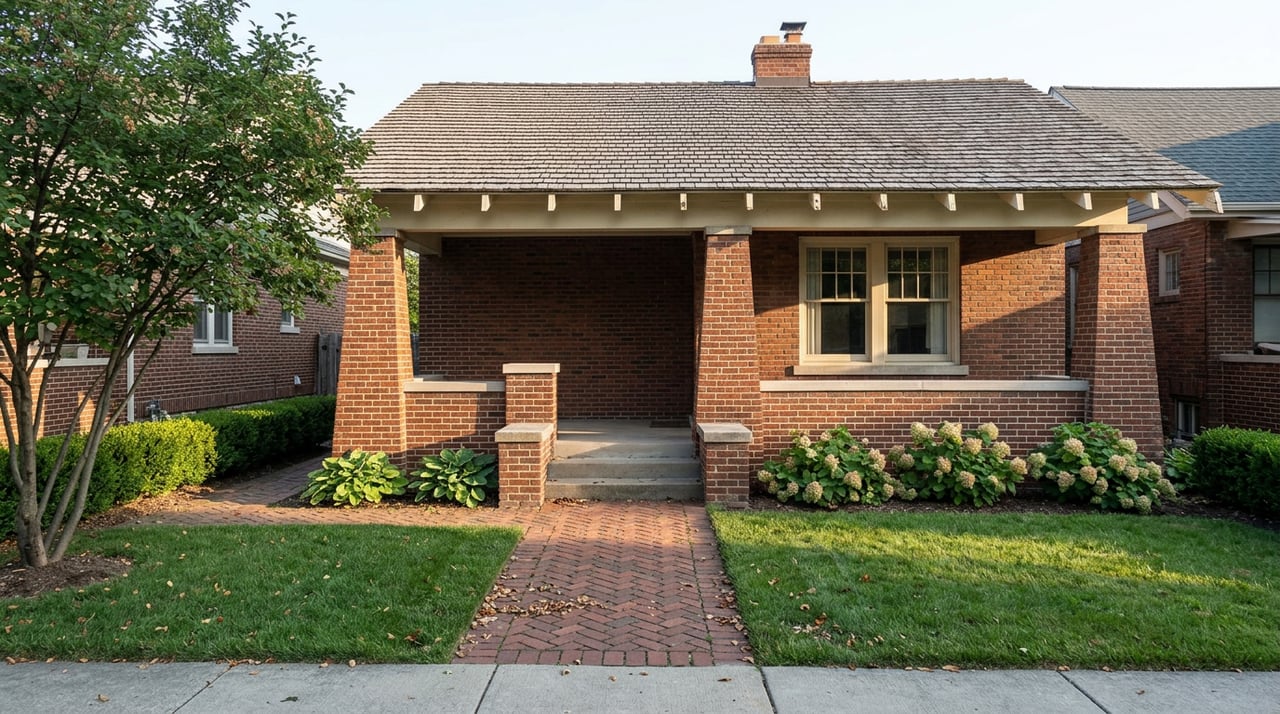
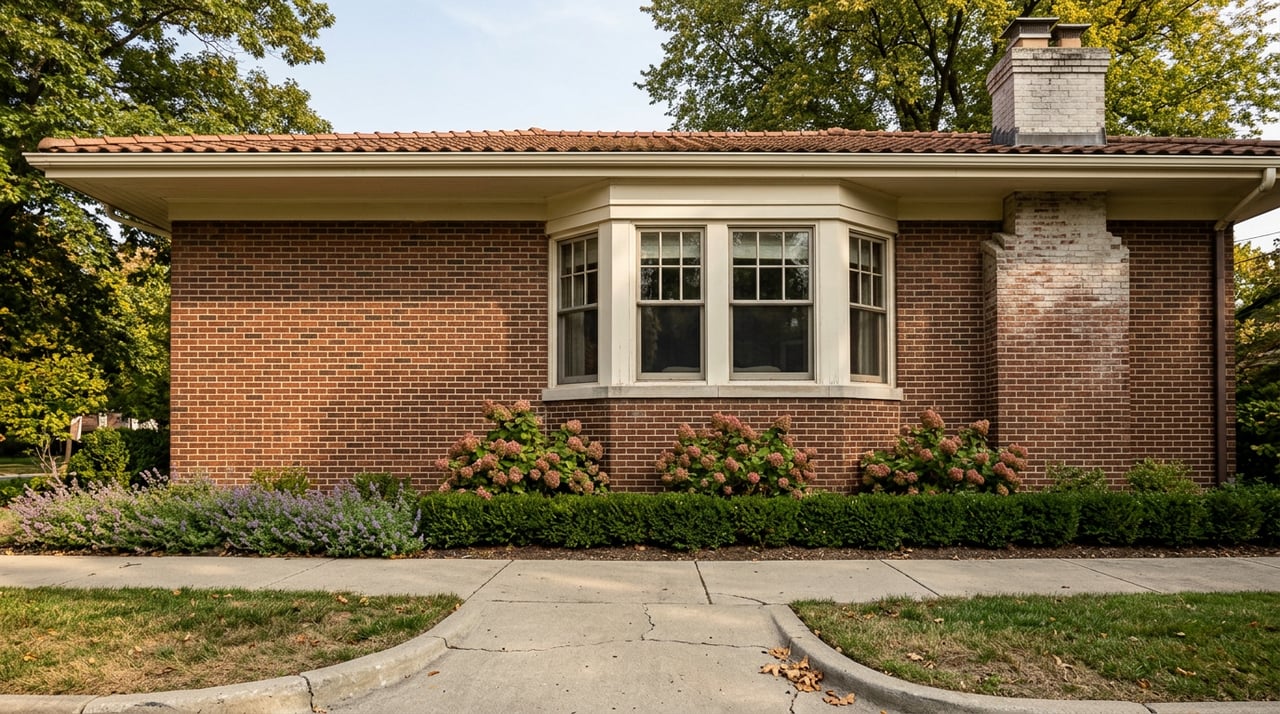
A hundred-year-old brick bungalow on a quiet street near South Gaylord doesn't announce its plumbing history from the curb. The porch columns are original. The hardwood is intact. The buyer touring on a Saturday afternoon sees leaded glass and a fireplace with built-in bookcases, not the four-inch clay pipe running from the foundation to the city main under a lawn that's been growing over it since Coolidge was in office. That gap between what a Washington Park home shows and what it's hiding underground is the whole story of why a sewer scope has quietly become the inspection nobody can afford to treat as optional here, even though Colorado law never asked for one.
Most homes in Wash Park were built between 1900 and 1940, with the brick Craftsman bungalow as the neighborhood's signature form between roughly 1910 and 1930, alongside Denver Squares and Tudor Revivals from the same building boom. That timing matters more than the architecture does. Homes from this era were plumbed with clay tile or early cast iron, materials that were standard practice a century ago and that are now, on average, well past the point where problems start showing up on camera even when the house shows no symptoms above ground.
Here's the tension nobody mentions in the walkthrough. Washington Park runs one of the tightest single-family markets in Denver. Recent snapshots this year have put the neighborhood's inventory at fewer than 20 active single-family listings at a time, with well-priced homes drawing multiple offers and closing in a matter of days. Redfin's own tracking of Washington Park in March 2026 showed a 98 percent sale-to-list ratio with over a fifth of homes selling above asking. That's the kind of market where buyers waive whatever they can to win, and the sewer line is an easy thing to waive precisely because it isn't part of a standard home inspection in the first place. A general inspector checks the roof, the panel, the furnace. Nobody puts a camera underground unless someone asks for it separately.
So the exact market conditions that make Wash Park desirable, speed and competition, are also the conditions most likely to push the one inspection that matters most for this specific housing stock to the bottom of the list. A buyer chasing a bungalow on South Franklin isn't thinking about bentonite clay. They're thinking about whether their offer will still be standing on Monday.
Denver's specific climate and soil compound the age problem in ways that don't apply evenly across the country. The city logs more than 90 freeze-thaw cycles a year, well above the roughly 70 a comparably old housing market like Indianapolis experiences, and each cycle works at any existing crack in old cast iron or clay tile. Underneath that, Front Range soil is bentonite-rich and expansive, swelling when wet and pulling back when dry, which the Colorado Geological Survey maps as a moderate to high hazard across most of central Denver. The combination pushes local defect patterns toward offset joints, bellies, and joint separation, rather than the more even scaling or corrosion patterns inspectors see in flatter, more stable soils elsewhere.
None of that shows up in a walkthrough. A pipe can be functioning fine on the day of the open house and still be sitting on a joint that's been slowly shifting for a decade. The only way to see it is to run a camera from a cleanout to the city tap, a process that typically takes under an hour and doesn't require digging up so much as a flower bed. Technicians working in Washington Park specifically have noted the need to protect lawn and garden access points during any follow-up repair work, which tells you something about how much landscaping equity sits directly above these lines in a neighborhood where mature trees and century-old foundation plantings are part of the appeal.
This is where the transaction gets interesting, and where a lot of well-intentioned sellers get it wrong. Colorado's Seller's Property Disclosure form, known in the trade as SPD19, asks sellers to report certain problems that have "ever existed" on the property, not just problems that exist right now. That single phrase changes the math for anyone who had a sewer issue years ago and assumes a completed repair closes the book on it. It doesn't. If a seller lined or replaced a section of pipe in 2019 after a root intrusion, that history still belongs on the disclosure, because a buyer is entitled to know a repair happened and to evaluate how well it was done, especially on a hidden system they can't inspect themselves without paying for it.
That rule sounds punitive, but it actually rewards sellers who get ahead of it. A pre-listing scope gives a seller documented, current knowledge of exactly what condition the line is in on the day they're signing the disclosure, rather than a guess based on memory of a plumber's visit from several years back. It's the difference between disclosing with confidence and disclosing from uncertainty, and in a state where a seller's failure to disclose a known material defect can create real legal exposure, confidence is worth the hour it takes to get it.
The math here isn't close. A sewer line camera inspection in the Denver metro runs an average of $748, with a typical range from roughly $151 to $1,359 depending on the length and condition of the line. Compare that to what happens if a buyer's inspector finds a collapsed or badly cracked section mid-transaction: repair estimates for Denver-area sewer line work commonly run from $3,000 into the $15,000-plus range, and that's before factoring in the schedule risk of trying to negotiate, permit, and complete that work inside a closing timeline that buyers in this market expect to move fast. A modern trenchless repair, where a resin-saturated liner is threaded through the existing pipe and cured in place, typically takes four to eight hours of active work once it's scheduled and is rated to last around 50 years, so the fix itself isn't the hard part. Finding out you need it during the Inspection Objection window, with a buyer's financing clock running and a backup offer waiting in the wings, is the hard part.
For a home in the $1.1 million to $1.7 million range, which is roughly where recent 2026 reporting has placed both Wash Park's typical single-family sale and its higher end near the park's perimeter streets, an unexpected five-figure sewer credit is a rounding error on paper and a real disruption in practice. It changes the number the seller nets, it gives a buyer leverage they didn't have during the offer stage, and it can stretch a closing that was supposed to take three weeks into something considerably longer.
Is a sewer scope legally required to sell a home in Colorado? No. Colorado's disclosure rules require sellers to report known material defects, including known sewer or septic problems, but they don't mandate a camera inspection as a condition of sale. The requirement is honesty about what you know, not a checklist of inspections you must commission. A pre-listing scope simply gives you something concrete to know.
If the scope finds a problem, who pays? That's negotiated, not fixed by statute. Depending on timing and leverage, a seller might complete the repair before closing, offer a price credit equal to the estimated cost, or split it with the buyer. Getting a scope done before listing means the seller controls which of those options to offer, rather than reacting to a buyer's contractor estimate under time pressure.
Does a repair years ago still need to be disclosed? Generally, yes. The Colorado disclosure form's language covers problems that have ever existed on the property, not only current ones, so a documented past repair should still appear on the SPD19 even if the line has performed well since.
Selling a century-old Washington Park bungalow means selling the porch, the built-ins, and the block, and it also means selling a piece of underground infrastructure nobody will see on a tour. Getting ahead of that story, rather than letting a buyer's inspector write it for you, is the kind of groundwork that protects both your timeline and your number. If you're weighing when to list a home in Wash Park or anywhere else in central Denver, Mckinze Casey puts that kind of local, transaction-level knowledge to work before the first showing. Request a Private Consultation to talk through what your specific home and street need before it hits the market.

Ready to turn your homeownership dreams into reality? Fantastic! Drop us a line below—because making magic happen is more fun when we do it together. Let's chat about your home aspirations and turn them into a blockbuster story. Ready, set, type away!