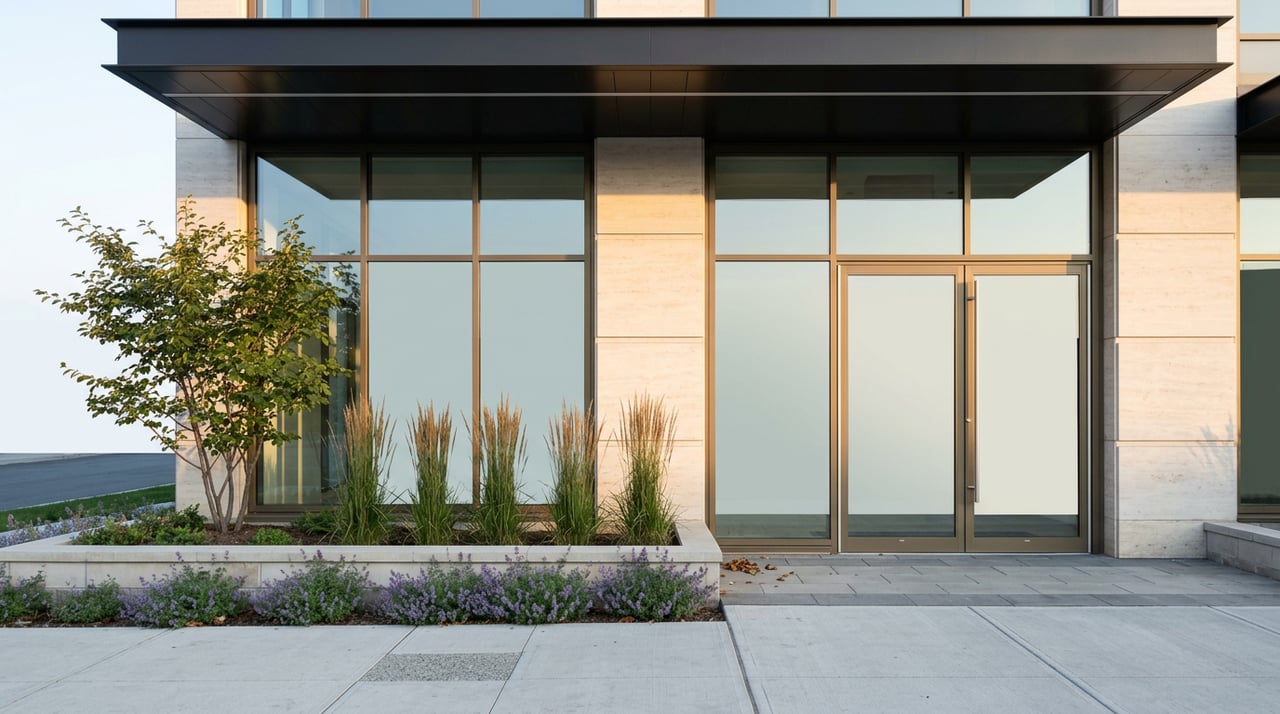
The Cherry Creek Condo Paradox: $1.8 Billion in New Towers, a Slowing Metro Market
September 17, 2026
September 17, 2026
Why would a developer break ground on a branded luxury condo tower in the same year Denver's condo market posted its worst days-on-market numbers in recent memory?
That's the question a buyer comparing Cherry Creek to anywhere else in Denver should be asking right now, because the two headlines contradict each other on the surface. Metro-wide, attached luxury properties sat on the market for an average of 99 days in August 2026, a 98 percent jump from a year earlier, while detached homes kept moving at their usual pace. At the same time, Cherry Creek is in the middle of roughly $1.8 billion in new residential and mixed-use construction, with a second branded luxury condo project now filed for permits a few blocks away. If condos are struggling everywhere else, why is Cherry Creek betting this much money on more of them?
The answer isn't that Cherry Creek is immune to the metro slowdown. It's that the slowdown and the construction boom are measuring two different things, and understanding the difference is exactly what tells you whether a specific Cherry Creek condo is a smart purchase or a good story wrapped around a risky HOA.
Start with what the Denver Metro Association of Realtors actually reported for August 2026. Detached homes closed at a median of $649,500, essentially flat year over year, while attached homes, condos and townhomes, closed at a median of $370,000, down almost 5 percent. The gap widens further in the luxury tier, where attached properties averaged 99 days in the MLS against a much faster pace for high-end detached homes.
| Segment (Metro Denver, Aug 2026) | Median Price | Days in MLS |
|---|---|---|
| Detached, all price points | $649,500 | 24 |
| Attached, all price points | $370,000 | 45 |
| Attached, luxury tier | Higher tier pricing | 99 (up 98% YoY) |
That table describes a citywide segment problem. Rising HOA insurance premiums, hail-related claims, and heavier common-area overhead have eroded the affordability case for condos across the metro, and buyers have responded by taking their time. It's a real trend, and it shows up in the data every month DMAR publishes.
What it doesn't describe is Cherry Creek specifically. Cherry Creek North's commercial vacancy tells an almost opposite story: office vacancy sat near 1.3 percent at the end of 2025, compared to roughly 29 percent downtown, and retail vacancy in the district held near 1.9 percent. New Class A office space in Cherry Creek is commanding rent growth near 5 percent this year, well above the 1 to 2 percent seen across the rest of metro Denver. When commercial tenants and retailers are fighting over a nearly full district, that scarcity extends to residential land too. There isn't much of it left to build on, which is precisely why developers keep showing up with checkbooks.
Cherry Creek West is the clearest evidence of that scarcity playing out. The $1.8 billion project sits on the neighborhood's southwest side, on a site that until recently held Elway's steakhouse, The Container Store, and a Macy's Furniture Gallery, along with a surface parking lot. That's four city blocks of land near First Avenue and University Boulevard being converted into four residential buildings and three office buildings, roughly 840 residences, 600,000 square feet of office space, 100,000 square feet of retail, and four acres of open space tying back into the Cherry Creek Trail. The first phase, an eight-story office tower and two 13-story residential buildings, is targeting completion by late 2029.
A second project confirms the pattern rather than standing apart from it. Plans have been filed for Four Seasons Private Residences Cherry Creek, an eight-story, roughly 41 to 42 unit condominium building on the 200 block of Detroit Street, a pivot from an earlier apartment concept to a branded, for-sale product. The development team, Dallas-based Stillwater Capital and Florida-based Wexford Real Estate Investors, working alongside local partners Brue Baukol Capital Partners and Zabel Investment Company, is still moving through Denver's design review process, with a sales center proposed across the street at 280 Detroit Street. No construction timeline has been announced yet, but the fact that a national hospitality brand is willing to attach its name to a Cherry Creek condo building in the same year the metro condo segment is cooling says something about where these developers think the risk actually sits.
The construction itself is visible enough that the Denver Gazette ran a piece in May 2026 describing Cherry Creek North as leaning into what one local business leader called "construction chic," with cranes, fencing, and "coming soon" signage on nearly every block. New luxury condos under the Ritz-Carlton and Waldorf Astoria names are part of that wave. It hasn't been free for existing businesses. Show of Hands, a gift shop that has operated in Cherry Creek for nearly 50 years, sat next to construction of an eight-story office building at 201 Fillmore Street. Owner Katie Friedland told the paper that keeping an open line with the general contractor, PCL Construction, on which days street closures would hit hardest made a real difference, along with directional signage the contractors put up around the block. That building is set to bring Antero Resources and a new restaurant, The Henry, from Fox Restaurant Concepts, before the end of the year.
None of that is incidental detail. It's the mechanism. Developers aren't building against the citywide condo slowdown, they're building around a specific submarket where land is nearly gone, commercial tenants are still paying a premium to be there, and the buyer pool for a well-located, well-run building hasn't gone anywhere.
Here's the part that matters most if you're actually about to write an offer. The neighborhood-level story in Cherry Creek is stronger than the metro average, but that doesn't make every condo in the neighborhood an equally good buy. It shifts the real question from "is Cherry Creek a safe place to own a condo" to "is this specific building financially healthy."
Cherry Creek's condo stock spans a wide range, from boutique buildings with a handful of units to full-service towers with concierge staff and underground parking, and HOA dues track that range closely. Boutique townhome associations often run in the low hundreds of dollars a month. Mid-rise buildings with more limited amenities tend to land somewhere between $350 and $800. Full-service luxury towers, the kind with 24-hour concierge, pools, and staffed lobbies, commonly run $700 to $1,500 a month, and some of the most amenity-heavy buildings run higher still. A lower list price on a condo doesn't automatically mean a lower monthly cost once you account for dues, and two units with similar square footage in different buildings can carry very different total housing costs once HOA fees are added to the mortgage payment.
Colorado's Common Interest Ownership Act requires associations to provide standardized resale documents before closing, and that packet is where the real diligence happens. Before you get attached to a unit, ask your agent or lender to pull:
A building with strong finances in a strong location is a genuinely different asset than a building with the same square footage and a thin reserve fund sitting two blocks away. The Cherry Creek address does a lot of work for both, but it doesn't erase the difference between them, and lenders reviewing project eligibility under Fannie Mae, Freddie Mac, or FHA guidelines will treat the two very differently as well.
If you're cross-shopping neighborhoods and you've seen the metro condo numbers, it's reasonable to wonder whether now is a strange time to consider a Cherry Creek condo at all. The honest answer is that Cherry Creek's fundamentals, tight commercial vacancy, land scarcity, and sustained developer conviction backed by real capital, put it in a different category than the citywide attached segment as a whole. That's worth something. It's not a substitute for reading the reserve study on the specific building you're considering, and it's not a reason to skip the diligence just because the neighborhood carries the name.
If you're weighing a Cherry Creek condo against a single-family home elsewhere in Denver, or trying to figure out what a slower metro condo market actually means for your timeline and your negotiating position, that's a conversation worth having before you start touring. Mckinze Casey works with relocating families, local sellers, and buyers across Denver's central neighborhoods every day, and a private consultation is the fastest way to get a straight read on a specific building or block, not just the neighborhood average.
Request a Private Consultation
Does the metro condo slowdown mean prices in Cherry Creek are falling too? Not necessarily in the same way. The metro-wide attached median fell to $370,000 in August 2026, but that figure blends every submarket in the region. Cherry Creek's land scarcity and near-full commercial build-out have kept developer interest high even as the broader segment cools, which is a different dynamic than a neighborhood in oversupply.
If a building has low HOA dues, is that automatically a better deal? Not on its own. Low dues can mean an efficiently run association, or they can mean a reserve fund that hasn't been keeping pace with the building's age and needs. The only way to know which one you're looking at is to read the reserve study and ask directly about planned capital work.

Ready to turn your homeownership dreams into reality? Fantastic! Drop us a line below—because making magic happen is more fun when we do it together. Let's chat about your home aspirations and turn them into a blockbuster story. Ready, set, type away!